RED LIGHT
THERAPY
Unlike UV light, Red Light Therapy isn’t designed to tan the skin. Instead, it is being researched and used across a growing range of applications involving skin health, recovery, tissue repair and general wellbeing.
At Revibe, we’ve invested in professional-grade Red Light Therapy technology so you can experience it right here in Jarrow.
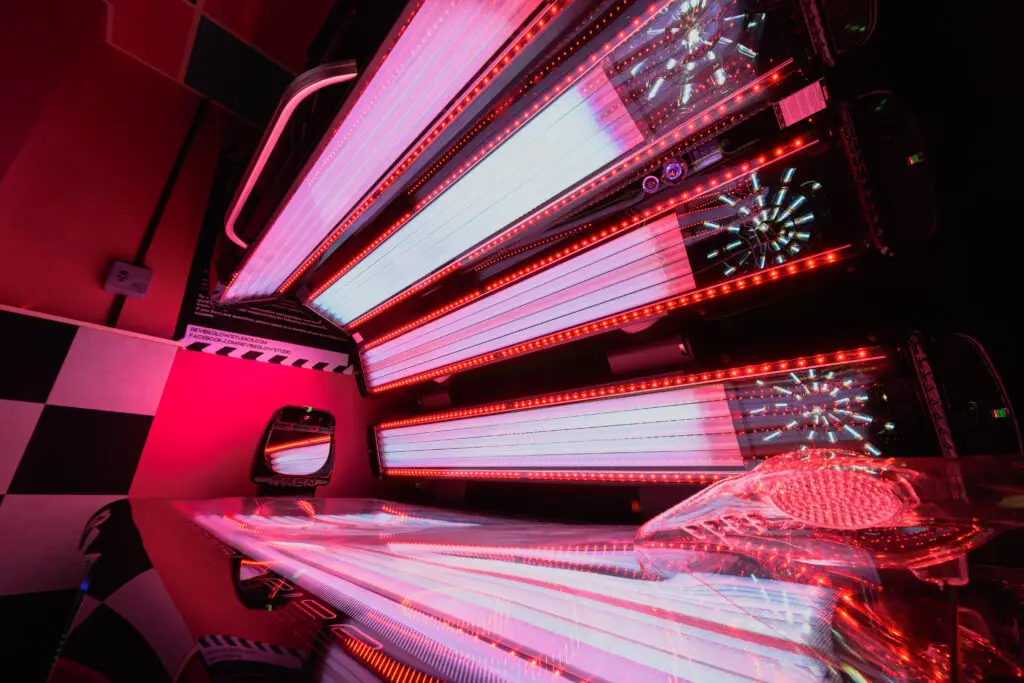
how does red light therapy work?
The science behind RLT starts at a cellular level.
Our cells contain structures called mitochondria, which are responsible for producing much of the energy our cells need to function.
Research suggests that certain wavelengths of red and near-infrared light can interact with processes within the mitochondria, influencing cellular activity and signalling.
This process is known as photobiomodulation.
It’s why RLT is now being studied across a wide range of applications, from skin and collagen to exercise recovery and tissue repair.
And while you’ll see some huge claims about Red Light Therapy online, we prefer to stick to what the research actually tells us.
what can red light therapy support?
Research into photobiomodulation continues to grow, with some of the most popular areas focusing on skin health, collagen production, exercise recovery and muscle performance.
Studies are also exploring its potential across a much wider range of applications, including tissue repair, pain and inflammatory processes. While the strength of evidence varies depending on the application, wavelength and treatment method, research into how red and near-infrared light interact with the body continues to develop.
Below, we’ve taken a closer look at some of the key areas being researched and what the current evidence tells us.
WHAT CAN RLT SUPPORT?
Research into photobiomodulation across multiple health outcomes.
→ Explore the research
SKIN HEALTH & COLLAGEN
One of the most researched uses of Red Light Therapy is its effect on the skin.
Clinical research has investigated how photobiomodulation may influence fibroblasts, the cells responsible for producing collagen and other important components of our skin.
Studies have reported improvements in areas such as skin appearance, collagen and visible signs of ageing following repeated RLT treatments.
That’s why Red Light Therapy has become increasingly popular as a non-invasive addition to skincare routines.
RLT & SKIN HEALTH
An easy-to-read look at red light therapy, collagen and skin health.
→ Read the guide
Muscle Recovery
RLT has also attracted significant interest within sport and exercise.
Research has explored its potential role in areas such as muscle recovery, soreness, fatigue and physical performance.
Results can vary depending on how RLT is used, so we prefer to think of it as something that may complement a wider recovery routine, rather than promising a particular result.
RLT & EXERCISE
Research into photobiomodulation, exercise and muscle performance.
→ Explore the BMJ research
Wider Uses & Ongoing Research
And the research doesn’t stop there.
Photobiomodulation continues to be investigated across areas including tissue repair, pain, inflammatory processes, hair growth and other clinical applications.
Evidence is stronger in some areas than others and research continues to develop.
Want to look deeper? We’ve selected some useful independent resources alongside this page.
PBM IN HEALTHCARE
See how photobiomodulation is being used within an NHS setting.
→ Read the NHS guide
red light therapy
safety
Red Light Therapy is generally considered safe when used correctly. Unlike tanning, RLT doesn’t use ultraviolet (UV) light and is non-invasive.
Sessions don’t involve needles, medication or recovery time, making RLT easy to incorporate into your usual routine.
As with any light-based treatment, it should still be used correctly. Eye protection may be recommended depending on the equipment being used, and you should always let our team know about any medical conditions, light sensitivity or medications that could make you more sensitive to light.
If you’re unsure whether RLT is suitable for you, we’d always recommend speaking to a healthcare professional first.
RLT & SAFETY
NHS information on photobiomodulation safety and important considerations.
→ Read the NHS information
customer case studies
Research can tell us a lot about Red Light Therapy, but we also want to share the experiences of the people actually using it.
Follow real Revibe customers as they incorporate RLT into their routines, from skin health and wellbeing to training and recovery.
Our case studies follow their experience over time, including why they decided to try RLT, how they’ve used it and, most importantly, what they’ve noticed along the way.
RED LIGHT
THERAPY
Unlike UV light, Red Light Therapy isn’t designed to tan the skin. Instead, it is being researched and used across a growing range of applications involving skin health, recovery, tissue repair and general wellbeing.
At Revibe, we’ve invested in professional-grade Red Light Therapy technology so you can experience it right here in Jarrow.
how does red light therapy work?
The science behind RLT starts at a cellular level.
Our cells contain structures called mitochondria, which are responsible for producing much of the energy our cells need to function.
Research suggests that certain wavelengths of red and near-infrared light can interact with processes within the mitochondria, influencing cellular activity and signalling.
This process is known as photobiomodulation.
It’s why RLT is now being studied across a wide range of applications, from skin and collagen to exercise recovery and tissue repair.
And while you’ll see some huge claims about Red Light Therapy online, we prefer to stick to what the research actually tells us.
What can red light therapy support?
Research into photobiomodulation continues to grow, with some of the most popular areas focusing on skin health, collagen production, exercise recovery and muscle performance.
Studies are also exploring its potential across a much wider range of applications, including tissue repair, pain and inflammatory processes. While the strength of evidence varies depending on the application, wavelength and treatment method, research into how red and near-infrared light interact with the body continues to develop.
Below, we’ve taken a closer look at some of the key areas being researched and what the current evidence tells us.
WHAT CAN RLT SUPPORT?
Research into photobiomodulation across multiple health outcomes.
→ Explore the research
skin health & collagen
One of the most researched uses of Red Light Therapy is its effect on the skin.
Clinical research has investigated how photobiomodulation may influence fibroblasts, the cells responsible for producing collagen and other important components of our skin.
Studies have reported improvements in areas such as skin appearance, collagen and visible signs of ageing following repeated RLT treatments.
That’s why Red Light Therapy has become increasingly popular as a non-invasive addition to skincare routines.
RLT & SKIN HEALTH
An easy-to-read look at red light therapy, collagen and skin health.
→ Read the guide
Muscle Recovery
RLT has also attracted significant interest within sport and exercise.
Research has explored its potential role in areas such as muscle recovery, soreness, fatigue and physical performance.
Results can vary depending on how RLT is used, so we prefer to think of it as something that may complement a wider recovery routine, rather than promising a particular result.
RLT & EXERCISE
Research into photobiomodulation, exercise and muscle performance.
→ Explore the BMJ research
Wider uses & ongoing research
And the research doesn’t stop there.
Photobiomodulation continues to be investigated across areas including tissue repair, pain, inflammatory processes, hair growth and other clinical applications.
Evidence is stronger in some areas than others and research continues to develop.
Want to look deeper? We’ve selected some useful independent resources alongside this page.
PBM IN HEALTHCARE
See how photobiomodulation is being used within an NHS setting.
→ Read the NHS guide
red light therapy safety
Red Light Therapy is generally considered safe when used correctly. Unlike tanning, RLT doesn’t use ultraviolet (UV) light and is non-invasive.
Sessions don’t involve needles, medication or recovery time, making RLT easy to incorporate into your usual routine.
As with any light-based treatment, it should still be used correctly. Eye protection may be recommended depending on the equipment being used, and you should always let our team know about any medical conditions, light sensitivity or medications that could make you more sensitive to light.
If you’re unsure whether RLT is suitable for you, we’d always recommend speaking to a healthcare professional first.
RLT & SAFETY
NHS information on photobiomodulation safety and important considerations.
→ Read the NHS information
customer case studies
Research can tell us a lot about Red Light Therapy, but we also want to share the experiences of the people actually using it.
Follow real Revibe customers as they incorporate RLT into their routines, from skin health and wellbeing to training and recovery.
Our case studies follow their experience over time, including why they decided to try RLT, how they’ve used it and, most importantly, what they’ve noticed along the way.